Monastery · Buddhist
Drepung Monastery
འབྲས་སྤུངས❊Zhebang Si
Tsongkhapa and the Gelug lineage·Founded 1416·Lhasa
Once among the largest monasteries in the world, terraced up a hillside west of Lhasa — and the site of the great Shoton thangka unfurling.
Dedicated to
Tsongkhapa and the Gelug lineage
Period
Founded 1416
Neighborhood
Mount Gephel, west of Lhasa
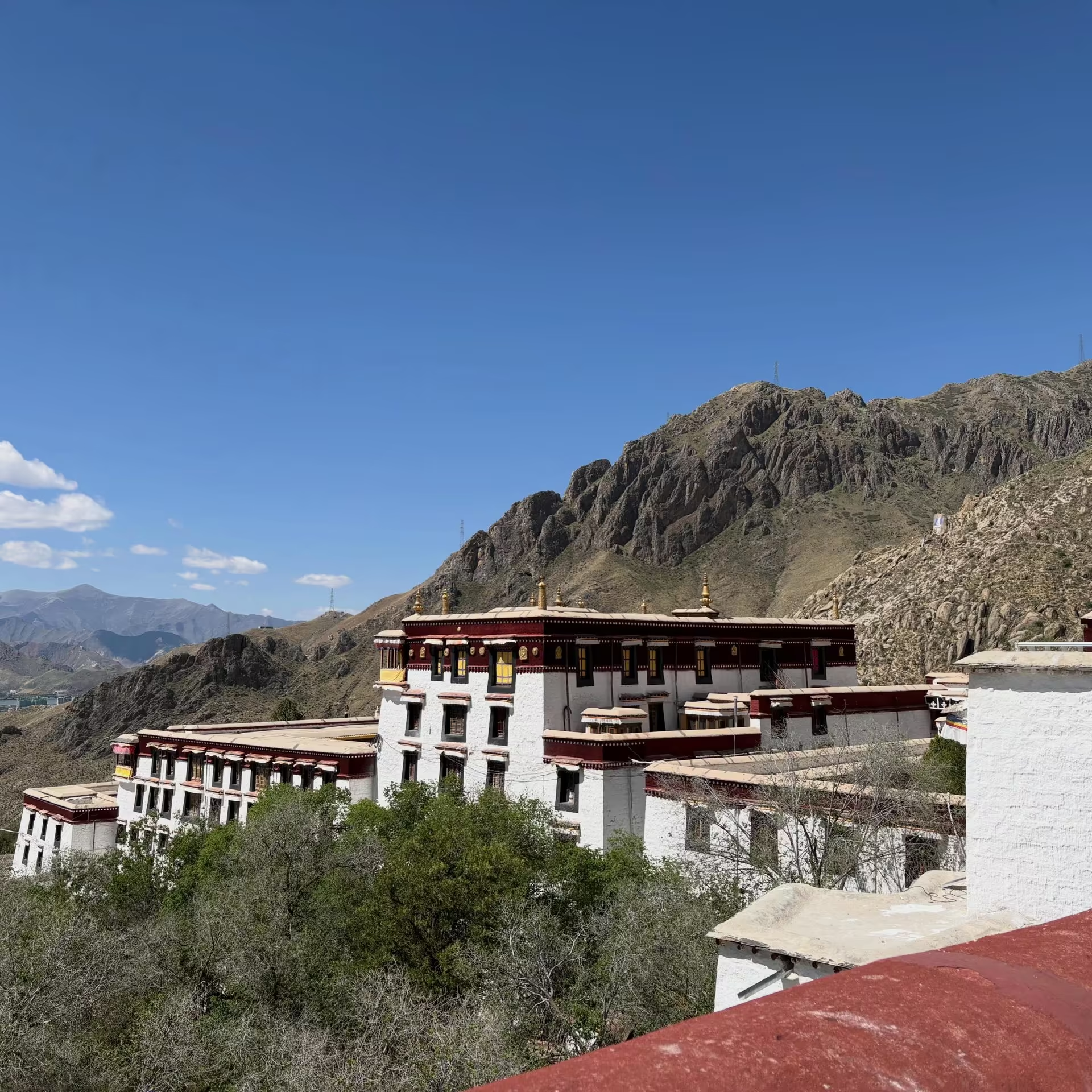
Drepung does not present as a building but as a hill town: white blocks stacked up the lower slopes of Mount Gephel, five kilometres of chapels, colleges, kitchens and residential courts, joined by lanes and stairways. The name means rice heap, and from the valley road that is exactly what it looks like.
The scale
Founded in 1416 by Jamyang Choje Tashi Palden, a disciple of Tsongkhapa, Drepung became the largest and most powerful of the three great Gelug monasteries of the Lhasa valley — at its height housing many thousands of monks across four separate colleges, with its own estates, granaries and political weight. The Ganden Palace within the complex was the residence of the early Dalai Lamas before the Potala was built, which makes this the seat from which the Fifth moved down the valley.
The twentieth century emptied most of it. What functions today is a fraction of the original establishment, but it is a working monastery again, and the scale of what stands is still hard to take in on one visit.
What to see
The Coqen (assembly) Hall is the centrepiece — a forest of pillars, hung with thangkas, opening onto chapels of gilded images. Above it the colleges climb in terraces, and the walk up between them, past kitchens where tea is still made in cauldrons the size of small rooms, is as much the experience as any single chapel.
Shoton begins here
At dawn on the first day of Shoton, an enormous appliquéd thangka is carried out and unfurled down the hillside above the monastery, and the crowd that gathers in the dark to see it is one of the great sights of the Tibetan year. The festival then moves down to Norbulingka for the opera. If you are in Lhasa for it, this is the morning to lose sleep over.
Pair Drepung with Sera — the two sit on opposite sides of the city and the standard Lhasa itinerary does one in the morning and one in the afternoon.
Best visited in autumn.autumn: best, 2°C to 17°C. The best window of the year: settled, dry, exceptionally clear air and comfortable daytime temperatures. Book accommodation and permits well ahead — this is when both foreign and domestic visitors arrive. monsoon: good, 10°C to 23°C. The plateau's warmest and greenest months. Rain is real but mostly falls overnight or in short afternoon bursts, so mornings usually stay clear; this is peak domestic travel season and the busiest time in Lhasa. spring: good, 1°C to 16°C. Dry, bright and windy. Days warm quickly at 3,650 m but nights stay near freezing, and the light is hard and clear — good conditions for Drepung's hillside courtyards, with the year's thinnest crowds before the summer wave. Permits for foreign travellers have been suspended in some years until late March; it does not happen every year, so confirm the current position before booking March travel. winter: possible, -9°C to 8°C. Cold, dry and startlingly clear, with almost no rain and the lowest prices of the year. Days are sunny and mild in shelter; nights are severe. This is the Tibetan pilgrimage season, so the kora circuits are busier than the sights. The site is steep and largely outdoors, so it is more exposed than the city temples. Permits for foreign travellers have been suspended in some years from around mid-February; it does not happen every year, so confirm the current position before booking February travel.
The Almanac
The best window of the year: settled, dry, exceptionally clear air and comfortable daytime temperatures. Book accommodation and permits well ahead — this is when both foreign and domestic visitors arrive.
Coda
Continue the Pilgrimage
Help us get it right
Know Drepung Monastery better than we do?
We write from research and reporting, and the ground changes faster than we can keep up. If something here is out of date, or you have been and would tell it differently, we would rather hear it.