Sacred Mountain · Syncretic
Mount Kailash
གངས་རིན་པོ་ཆེ❊Gang Rinpoche / Kang Rinpoche / Gangdise / Tise (Bon) / Kailasa
Shiva (Hindu); Demchok/Chakrasamvara (Buddhist); Rishabhanatha (Jain); Sipaimen and the descent of Tonpa Shenrab (Bon)·Sacred in four living traditions; never climbed, by religious prohibition·Ngari
A 6,638 m peak in far-western Tibet held sacred by Hindus, Buddhists, Jains and Bonpo alike, never climbed, and circled on foot by pilgrims on a three-day kora.
Dedicated to
Shiva (Hindu); Demchok/Chakrasamvara (Buddhist); Rishabhanatha (Jain); Sipaimen and the descent of Tonpa Shenrab (Bon)
Period
Sacred in four living traditions; never climbed, by religious prohibition
Neighborhood
Gangdise range, north of Darchen, far-western Ngari
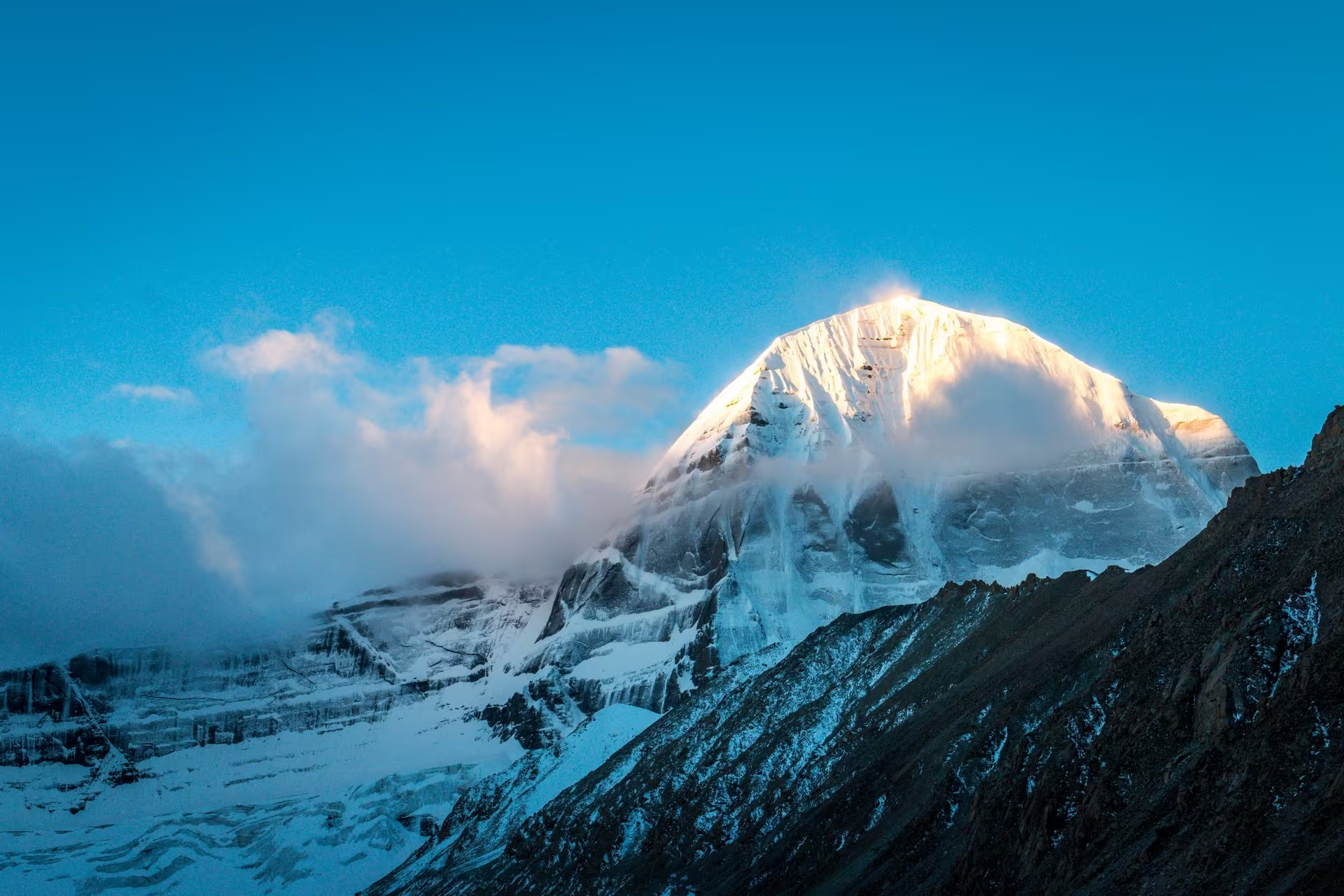
There is no other mountain like Kailash. Four religions hold it sacred, it has never been climbed, and the entire practice attached to it happens at its foot rather than on its flanks — pilgrims walk a circuit of roughly 52 kilometres around the base, and that walk, not a summit, is the point.
Its shape does a great deal of the work. Kailash stands apart from the ranges around it, a near-symmetrical dome of dark rock striped with horizontal strata and cut by a long vertical cleft on the south face, capped with snow. It looks deliberate in a way mountains rarely do, and every tradition that claims it has read something into that.
Four traditions, one mountain
For Hindus it is the abode of Shiva, who sits there in meditation with Parvati — which makes it, in the most literal sense, a place a god lives rather than a place a god visited. For Buddhists it is the seat of Demchok (Chakrasamvara), and the mountain is bound up with Milarepa's contest with the Bon master Naro Bonchung. For Jains it is Ashtapada, where Rishabhanatha, the first tirthankara, attained liberation. For Bon, the older Tibetan tradition, it is Tise, the nine-storey swastika mountain and the point where their founder Tonpa Shenrab descended to earth.
That overlap is not a curiosity of comparative religion. It is why the kora path carries Tibetan pilgrims, Indian yatris, and Bonpo walking the opposite way around, all on the same track on the same afternoon.
The source of four rivers
The region around Kailash gives rise to four of Asia's great rivers — the Indus, the Sutlej, the Brahmaputra (Yarlung Tsangpo) and the Karnali, a major Ganges tributary — flowing out to four points of the compass. The traditions describe this as four rivers from the mountain's four faces; the hydrology is less tidy than the symbolism but the essential fact holds, and it is a large part of why this particular massif became the axis of the world for so many people.
Seeing it
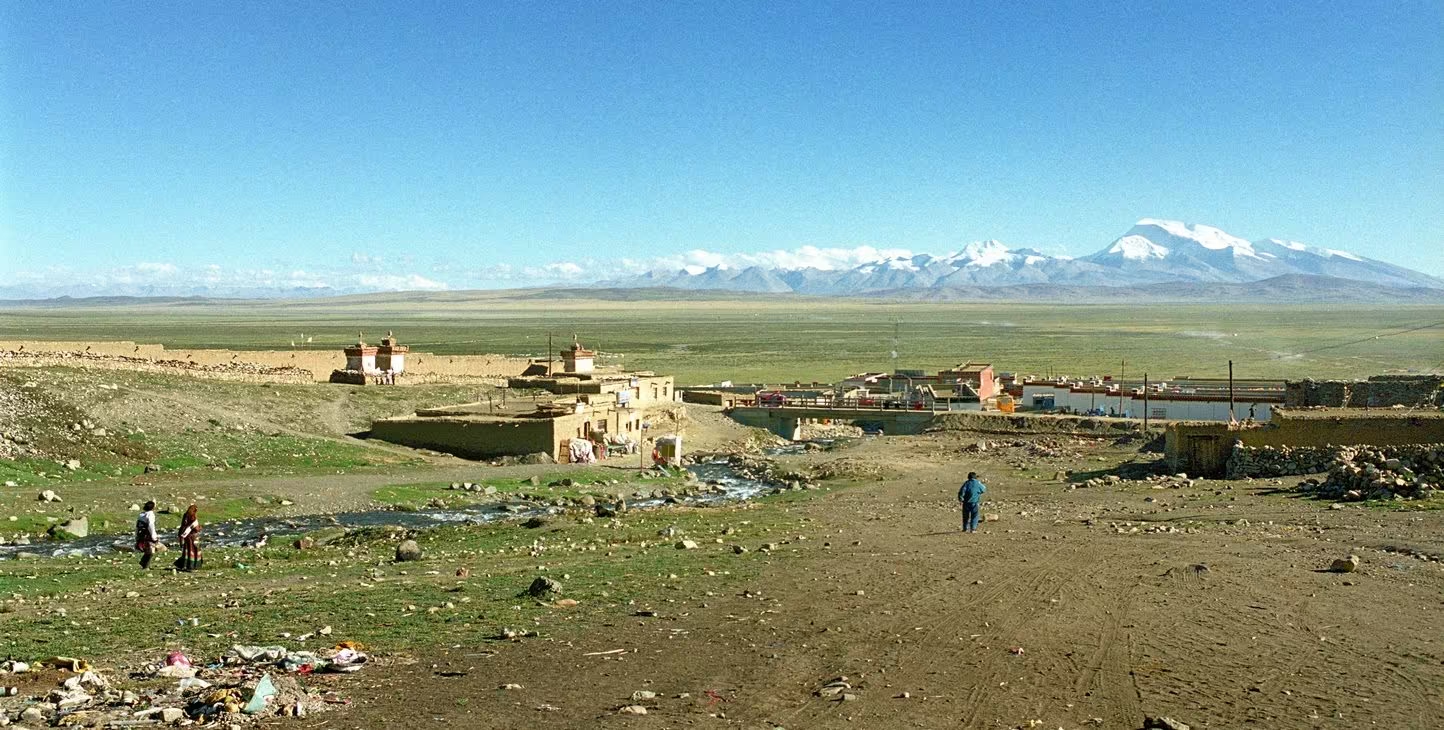
Most travellers reach Kailash from Darchen, the small town on the south side that serves as trailhead, and either walk the three-day kora or take a shorter walk up the valley for the south-face view. The classic close view of the north face is from Dirapuk, the first night's stop. Whether you walk the circuit or not, the mountain is visible from the approach for a long time before you arrive.
The pilgrimage peaks at Saga Dawa, when the flagpole at Tarboche is re-raised and the trail fills.
Coda
Continue the Pilgrimage
Elsewhere in this region
Help us get it right
Know Mount Kailash better than we do?
We write from research and reporting, and the ground changes faster than we can keep up. If something here is out of date, or you have been and would tell it differently, we would rather hear it.