Palace · Buddhist
Norbulingka
ནོར་བུ་གླིང་ཀ❊Luobulinka
The Dalai Lamas·Founded 1755 under the Seventh Dalai Lama; last palace added in the 1950s·Lhasa·UNESCO World Heritage
The summer palace and garden of the Dalai Lamas, west of central Lhasa — and the venue of the Shoton festival.
Dedicated to
The Dalai Lamas
Period
Founded 1755 under the Seventh Dalai Lama; last palace added in the 1950s
Neighborhood
West Lhasa
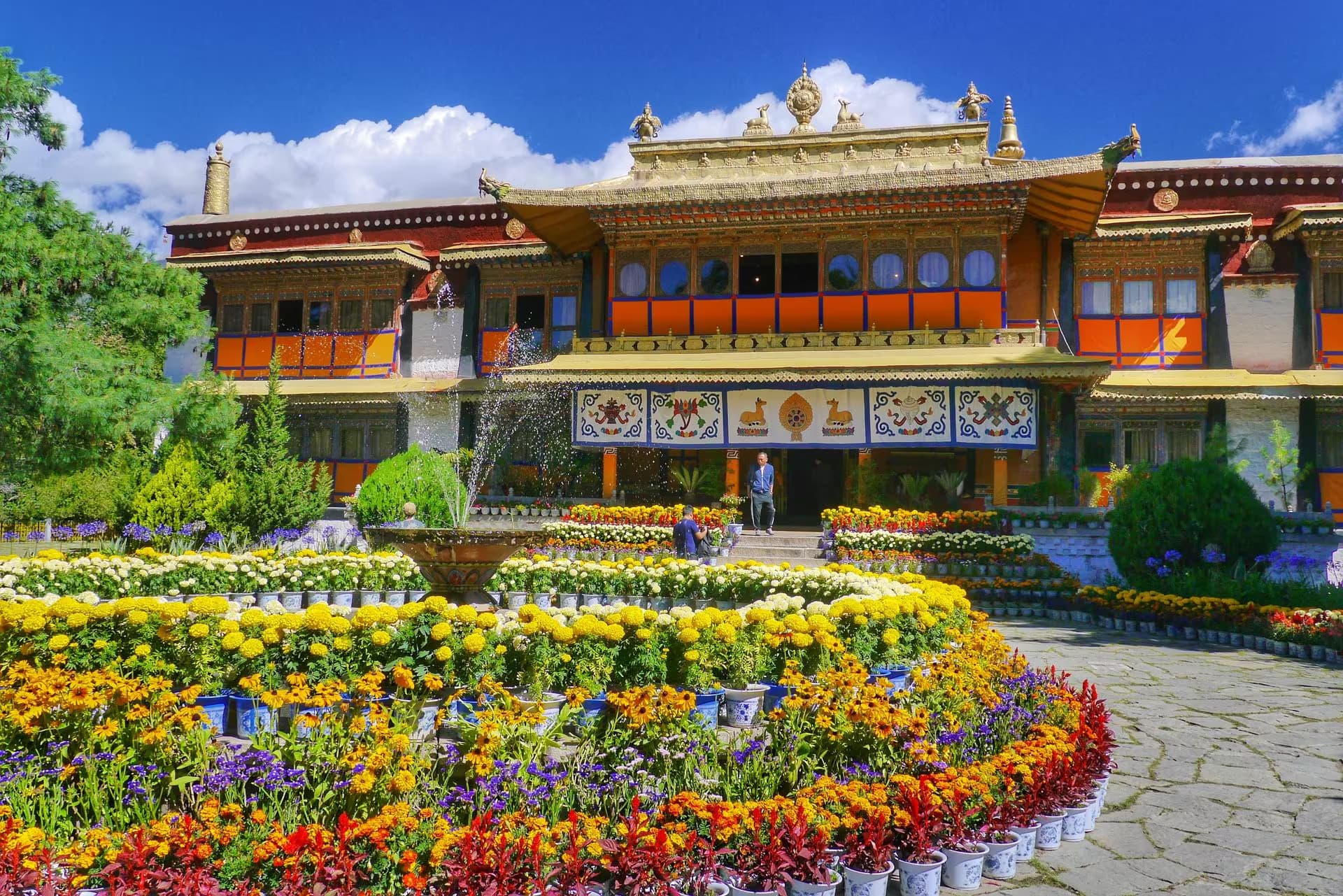
Norbulingka — the Jewel Park — is what the Potala is not: low, green, walled, and built for leisure. The Dalai Lamas moved here from the palace on the hill each spring and stayed through the warm months, and the compound accumulated as they did, a series of separate small palaces and pavilions set in around thirty-six hectares of gardens, ponds and old trees.
A garden that grew palaces
The Seventh Dalai Lama established it in 1755, reportedly on the advice of his physicians, around a spring west of the city. Each subsequent incarnation added to it rather than replacing what was there, so the site reads as a sequence: the Thirteenth's palace, the Eighth's pavilion, and at the far end the New Summer Palace completed in the 1950s for the Fourteenth — the last building here to be used as intended, and preserved much as it was left, down to the radio and the bathroom fittings.
It was inscribed on the UNESCO World Heritage list in 2001, as an extension of the Potala listing.
Shoton
For most of the year Norbulingka is a quiet park. During Shoton — the Yogurt Festival, in the seventh Tibetan month — it becomes the busiest place in Lhasa: multi-day performances of lhamo, Tibetan opera, on the open ground, and families camped under the trees for the duration. If your dates fall anywhere near it, come here for that rather than for the interiors.
Visit it in the same day as the Potala if you can. The contrast is the point — the same institution, seen at work and at rest.
Coda
Continue the Pilgrimage
Help us get it right
Know Norbulingka better than we do?
We write from research and reporting, and the ground changes faster than we can keep up. If something here is out of date, or you have been and would tell it differently, we would rather hear it.