Monastery · Buddhist
Palcho Monastery & Kumbum
དཔལ་འཁོར་ཆོས་སྡེ❊Pelkor Chode / Baiju Si
Multiple lineages — Sakya, Gelug and Buton traditions share the compound·Monastery founded 1418; the Kumbum completed in the 1420s–1430s·Shigatse
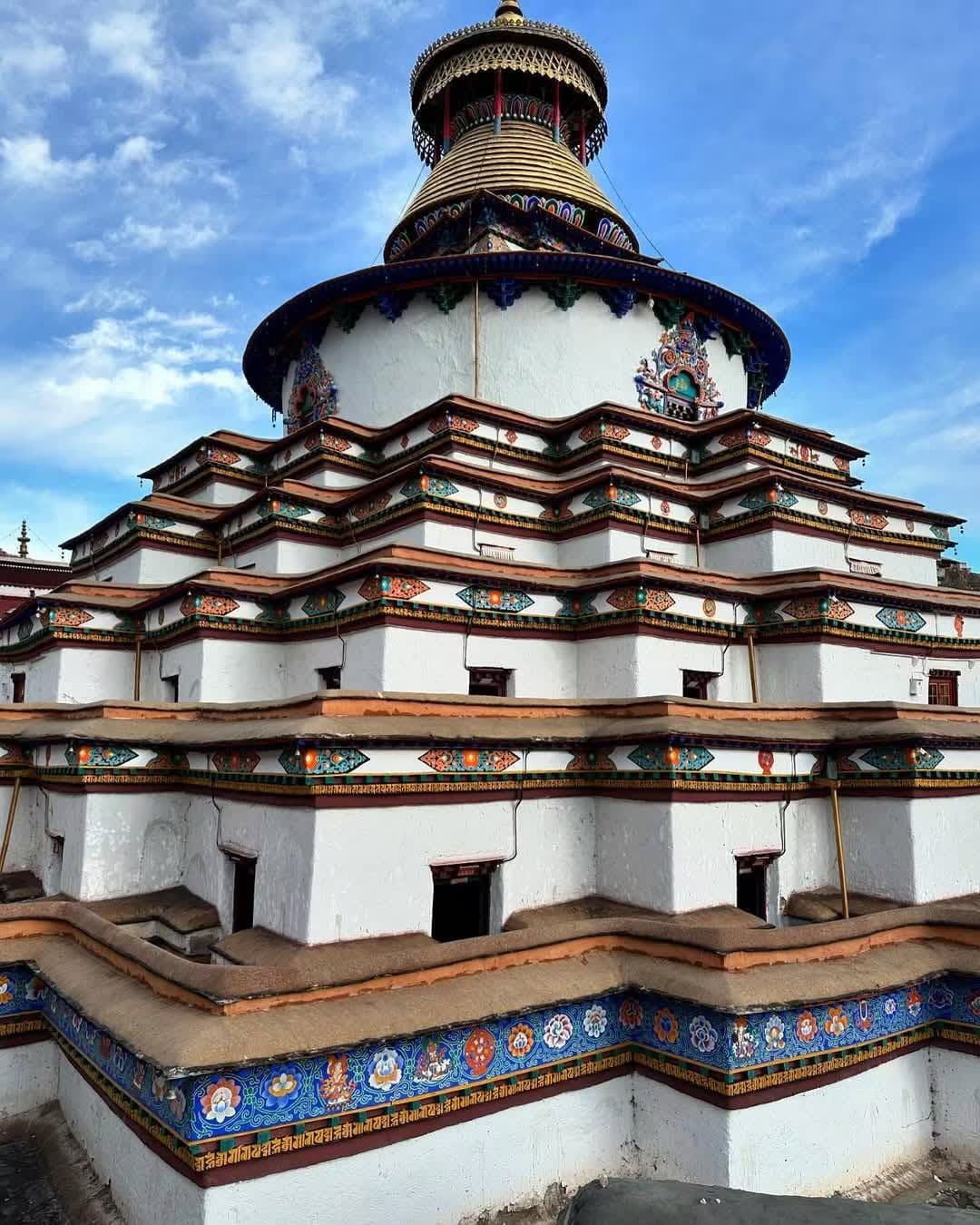
Gyantse's walled monastic compound, and the tiered Kumbum stupa — a nine-storey stack of chapels with no real parallel anywhere in the Himalaya.
Dedicated to
Multiple lineages — Sakya, Gelug and Buton traditions share the compound
Period
Monastery founded 1418; the Kumbum completed in the 1420s–1430s
Neighborhood
Gyantse, below the dzong
Palcho sits in a walled compound at the top of Gyantse, under the crag with the dzong on it, and it holds the most unusual building in Tibet. It is also, unusually, a compound shared between schools — Sakya, Gelug and the Buton tradition held colleges here side by side, which is why the iconography inside is so much broader than a single-school monastery's.
The Kumbum
The Kumbum — hundred thousand images — is a stupa in outline and a building in practice: nine tiers stepping inward to a golden dome and a pair of painted eyes, and inside, arranged around each level, some seventy-odd chapels holding statuary and wall paintings.
You climb it from within, on tight dark stairways, and the effect is cumulative: each chapel is a small lit box of 15th-century murals — mandalas, protectors, lineage portraits — and you meet them one at a time, dozens of them, until the sequence stops being individual rooms and becomes a single argument about the structure of the cosmos, which is exactly what it was built to be. The paintings are widely held to be the finest surviving body of Gyantse-school work anywhere, and much of it is original rather than restored.
Bring a torch. Half the chapels have no light beyond what comes through the door.
The rest of the compound
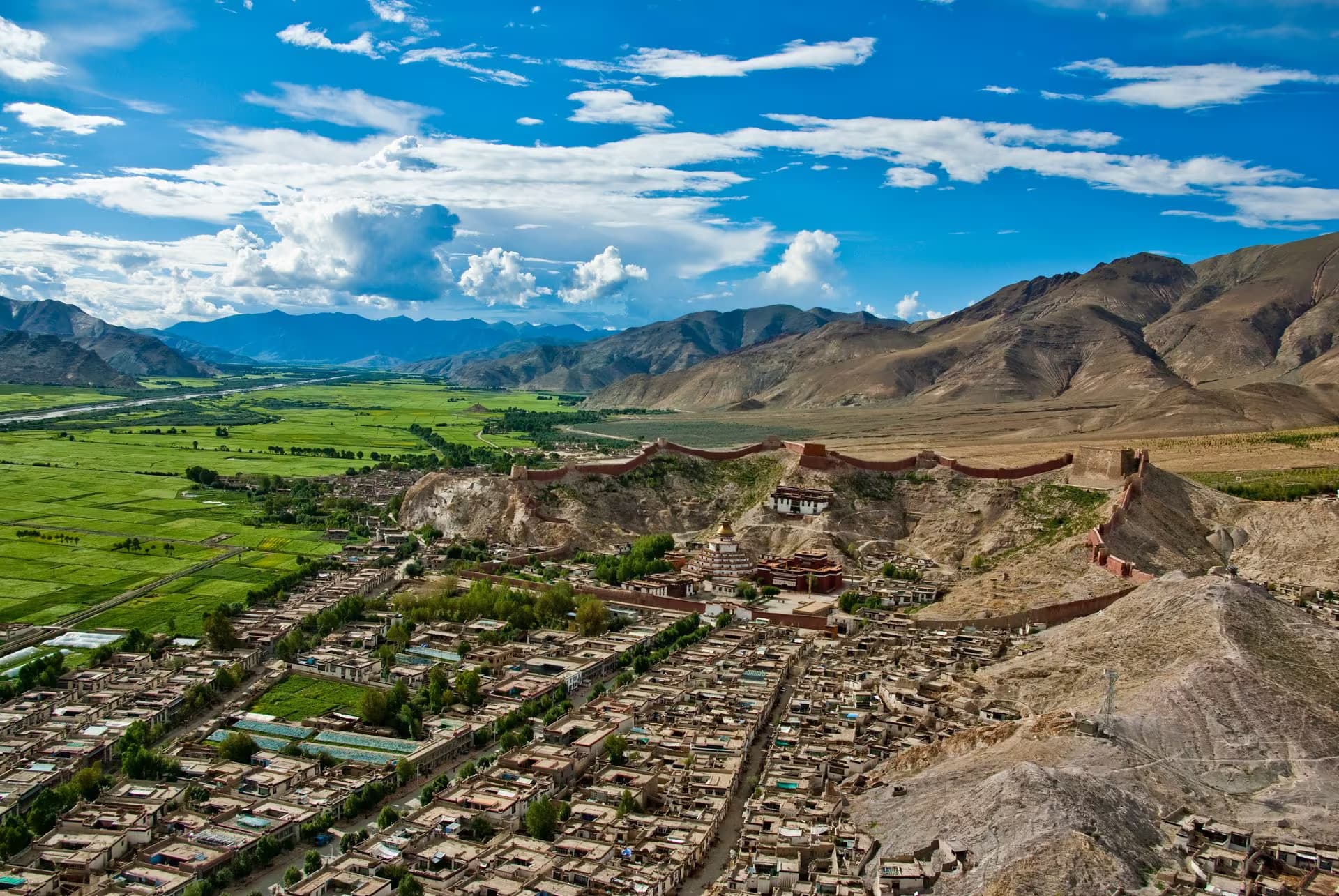
The assembly hall beside it is worth the time for its own murals and a fine three-dimensional mandala. Above the compound, the walls of the old defensive circuit climb the ridge to the Gyantse Dzong, and the walk up gives the view that puts the whole thing in order: the Kumbum's tiers below, the monastery walls, the old town's flat roofs, and barley fields running out to the mountains.
Gyantse is roughly midway between Lhasa and Shigatse on the southern road, and it is the best-preserved old Tibetan town on the corridor. Break the drive here rather than pushing through.
Coda
Continue the Pilgrimage
Part of
Gyantse
Elsewhere in this region
Help us get it right
Know Palcho Monastery & Kumbum better than we do?
We write from research and reporting, and the ground changes faster than we can keep up. If something here is out of date, or you have been and would tell it differently, we would rather hear it.