Monastery · Buddhist
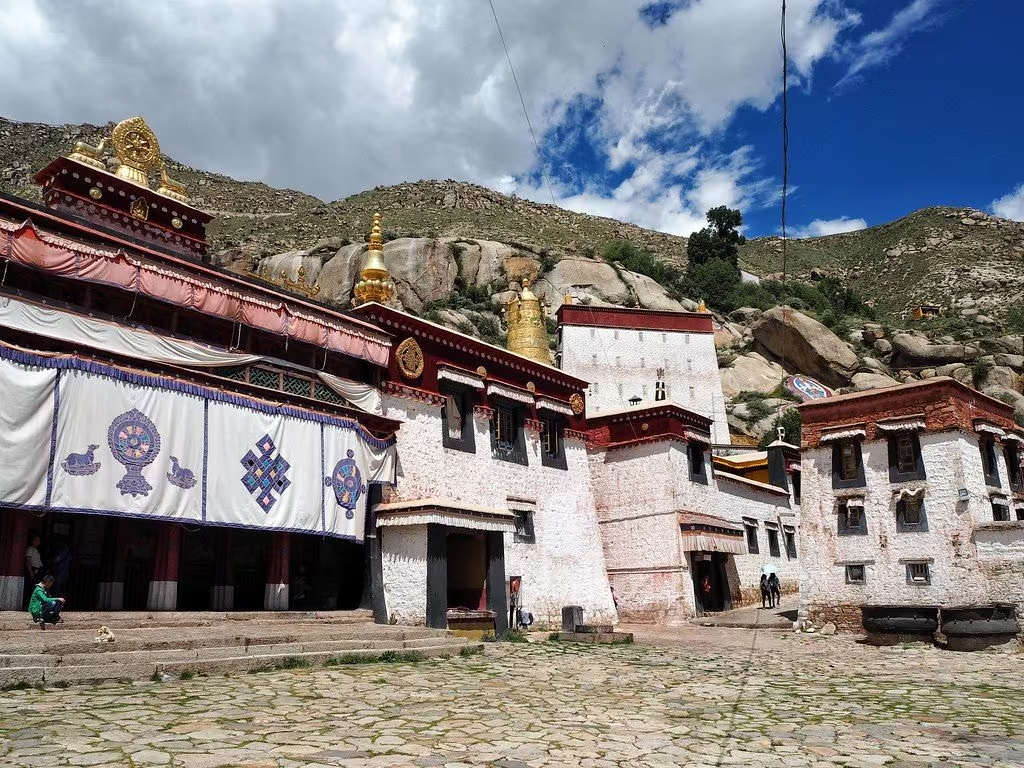
Sera Monastery
སེ་ར❊Sela Si
Tsongkhapa and the Gelug lineage·Founded 1419·Lhasa
One of Lhasa's three great Gelug monasteries, at the foot of Mount Pubuchok — best known for its afternoon debating courtyard.
Dedicated to
Tsongkhapa and the Gelug lineage
Period
Founded 1419
Neighborhood
Foot of Mount Pubuchok, north Lhasa
Sera sits against the hills on the northern edge of Lhasa, close enough to reach in twenty minutes and far enough that the city noise stops at the gate. It was founded in 1419 by Jamchen Choje Sakya Yeshe, another of Tsongkhapa's disciples, and grew into the second of the three great Gelug monasteries of the valley — three colleges, thousands of monks, and a reputation specifically for scholastic training.
The debates
That reputation is still the draw, and it is the rare monastic attraction that is a living activity rather than an object. On most weekday afternoons the monks assemble in a walled, tree-shaded courtyard for riglam — formal dialectical debate — and it is nothing like the hush visitors expect of a monastery. Pairs and small groups argue points of logic and doctrine at volume, standing over their seated opponents, driving each question home with a hard sweeping clap. It runs for an hour or more, in Tibetan, and you will follow none of the content and all of the structure.
Check the day's schedule locally before committing an afternoon to it: the debates follow the monastic calendar and do not run every day.
The rest of the complex
Beyond the courtyard, the assembly hall and the three colleges hold the usual sequence of gilded chapels; the Hayagriva chapel in Sera Me draws a steady queue of local pilgrims, particularly families with young children. Behind the monastery, a kora climbs the hillside past hermitages and rock paintings, and it is the better half of a visit if you have the legs and the acclimatisation for it.
Best visited in autumn.autumn: best, 2°C to 17°C. The best window of the year: settled, dry, exceptionally clear air and comfortable daytime temperatures. Book accommodation and permits well ahead — this is when both foreign and domestic visitors arrive. monsoon: good, 10°C to 23°C. The plateau's warmest and greenest months. Rain is real but mostly falls overnight or in short afternoon bursts, so mornings usually stay clear; this is peak domestic travel season and the busiest time in Lhasa. The afternoon debating courtyard is open-air and can be rained off; check it is sitting on the day, as it does not run daily. spring: good, 1°C to 16°C. Dry, bright and windy. Days warm quickly at 3,650 m but nights stay near freezing, and the light is hard and clear — good conditions for Sera, with the year's thinnest crowds before the summer wave. Permits for foreign travellers have been suspended in some years until late March; it does not happen every year, so confirm the current position before booking March travel. winter: possible, -9°C to 8°C. Cold, dry and startlingly clear, with almost no rain and the lowest prices of the year. Days are sunny and mild in shelter; nights are severe. This is the Tibetan pilgrimage season, so the kora circuits are busier than the sights. Permits for foreign travellers have been suspended in some years from around mid-February; it does not happen every year, so confirm the current position before booking February travel.
The Almanac
The best window of the year: settled, dry, exceptionally clear air and comfortable daytime temperatures. Book accommodation and permits well ahead — this is when both foreign and domestic visitors arrive.
Coda
Continue the Pilgrimage
Help us get it right
Know Sera Monastery better than we do?
We write from research and reporting, and the ground changes faster than we can keep up. If something here is out of date, or you have been and would tell it differently, we would rather hear it.