Monastery · Buddhist
Tashilhunpo Monastery
བཀྲ་ཤིས་ལྷུན་པོ❊Zhashilunbu Si
Maitreya; the Panchen Lamas·Founded 1447 by Gendun Drup, later recognised as the First Dalai Lama·Shigatse
The seat of the Panchen Lamas in Shigatse, and the largest functioning monastery in Tibet — built around a twenty-six-metre gilded Maitreya.
Dedicated to
Maitreya; the Panchen Lamas
Period
Founded 1447 by Gendun Drup, later recognised as the First Dalai Lama
Neighborhood
Shigatse, below Drolmari hill
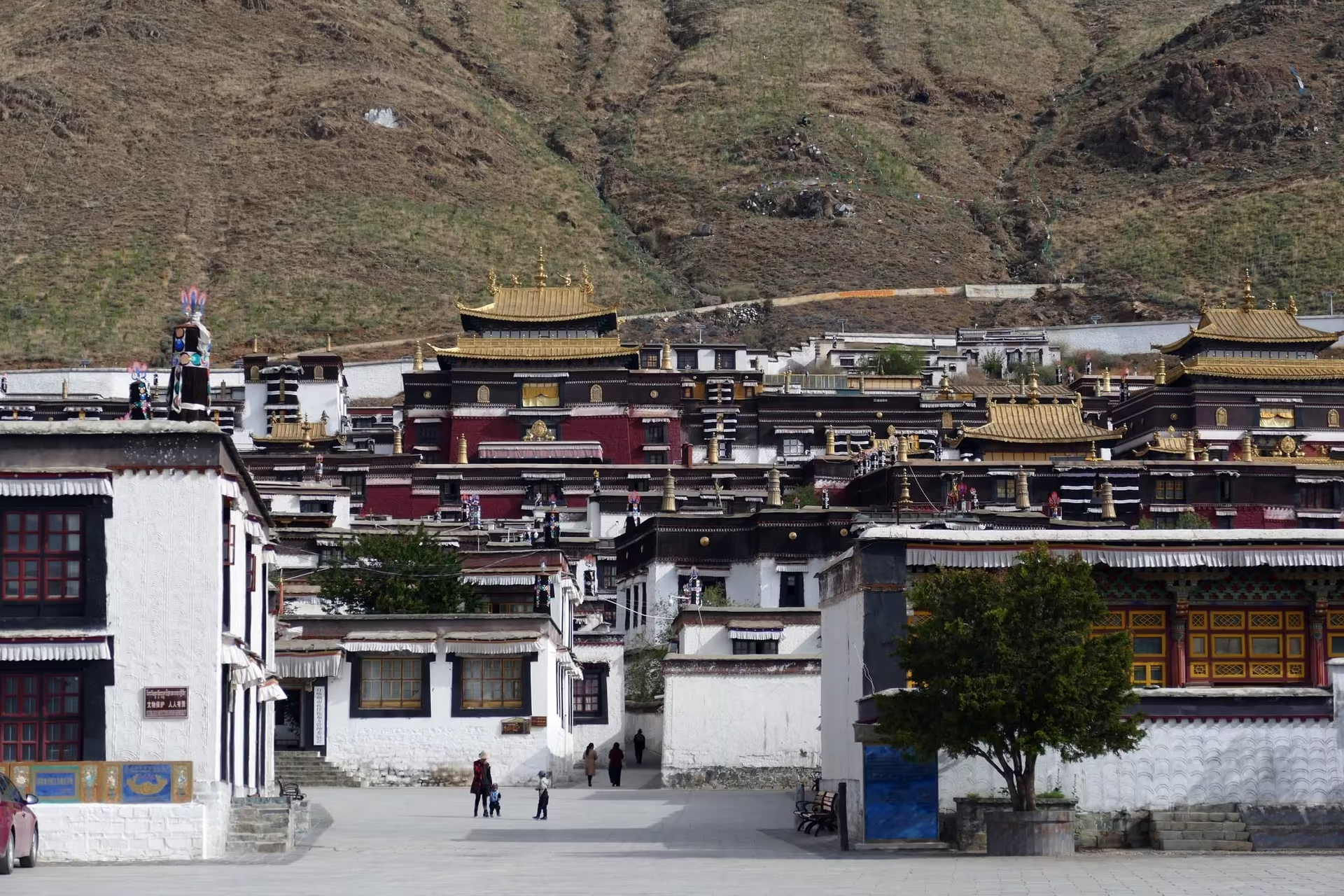
Tashilhunpo is the reason to stop in Shigatse, and it is the monastery that most rewards a first-time visitor to Tibet: large, walled, structurally intact, and busy with pilgrims rather than tour groups. It climbs the slope below Drolmari hill in tiers of whitewashed walls and gilded roofs, and unlike Ganden or Drepung it came through the twentieth century comparatively unharmed.
The Panchen Lama's seat
Founded in 1447 by Gendun Drup, a disciple of Tsongkhapa later recognised retrospectively as the First Dalai Lama, Tashilhunpo became the seat of the Panchen Lamas, the second great incarnation lineage of the Gelug school. That institutional weight is what kept it whole and what fills it: this remains the largest working monastery in Tibet, and the pilgrim traffic through it is continuous.
The Maitreya
The Chapel of Jampa holds the single object people remember — a seated Maitreya, the Buddha of the future, some twenty-six metres high, gilded and jewelled, completed in the early twentieth century under the Ninth Panchen Lama. The chapel is built as a shaft around it, so you meet the statue in sections as you climb: feet, hands, and finally the face, from a gallery near the top.
Elsewhere the tomb chapels of successive Panchen Lamas hold their gold-and-silver reliquary stupas, and the great Kelsang courtyard — flagged, arcaded, hung for festivals — is where the monastery assembles.
Around it
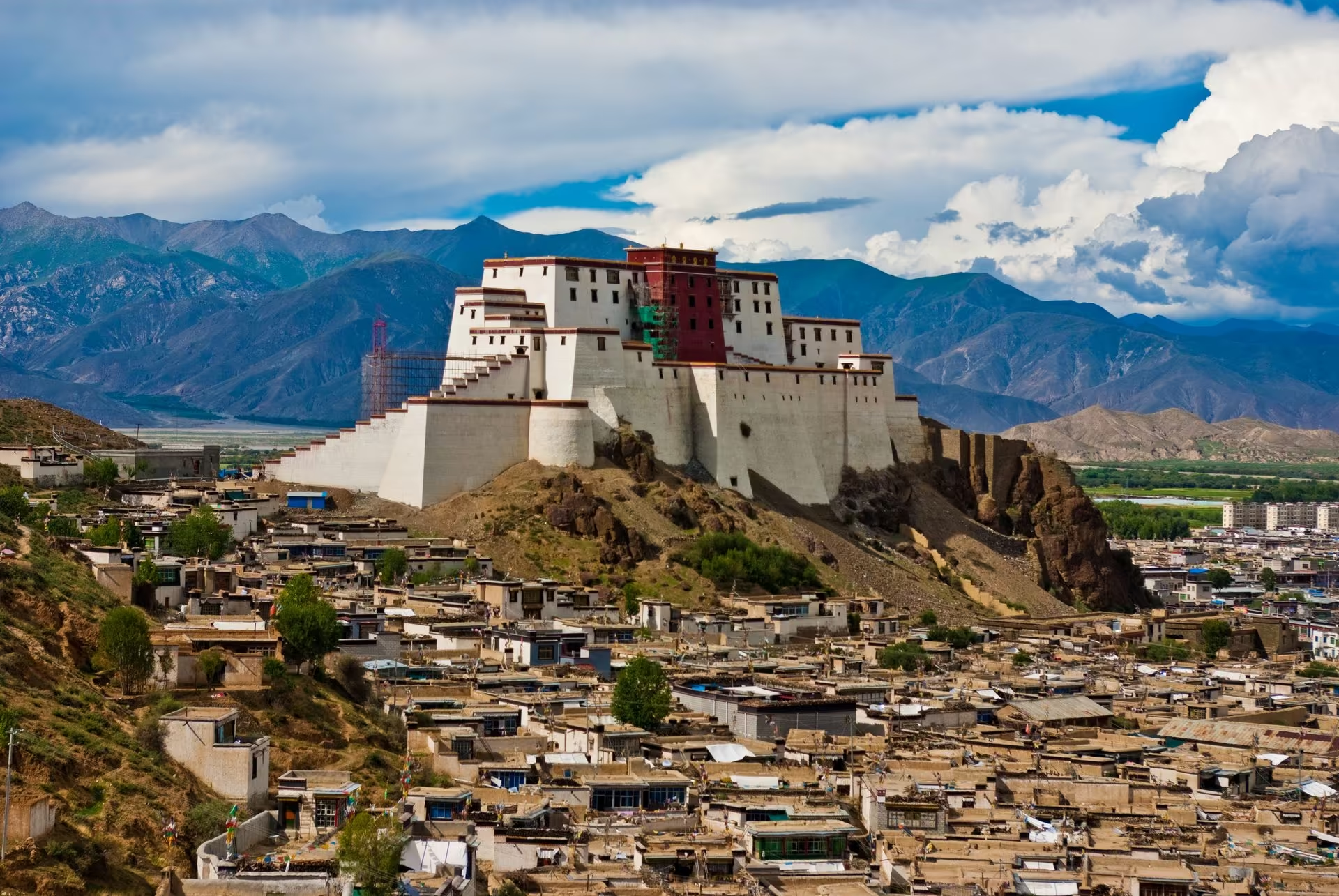
The kora loops the outside of the monastery walls, an easy hour, and is where you will see the most local pilgrims. Above the town, the ruins of the Shigatse Dzong make the obvious second stop and a good view back down over the monastery roofs.
Shigatse is the staging point for the Everest north side and the Nepal border road, so most itineraries pass through with a night here — Tashilhunpo is what that night is for.
Best visited in autumn.autumn: best, 0°C to 15°C. The clearest and most settled window, and the reason most itineraries run Lhasa–Gyantse–Shigatse in September and October. Cold nights, brilliant days, long Himalayan sightlines. monsoon: good, 8°C to 21°C. Warmest months, with short afternoon showers and green valleys. Views toward the Himalaya are less reliable than in autumn, but the towns are at their liveliest. spring: good, -1°C to 14°C. Dry and windy, with cold mornings and fast-warming afternoons. A quiet, comfortable time for Tashilhunpo's chapels and Maitreya hall before the summer crowds reach the Friendship Highway. Permits for foreign travellers have been suspended in some years until late March; it does not happen every year, so confirm the current position before booking March travel. winter: possible, -12°C to 7°C. Very cold and very clear, with few visitors and low prices. Travel is straightforward on the paved highway, but unheated rooms and short daylight make it a demanding time to sightsee. Permits for foreign travellers have been suspended in some years from around mid-February; it does not happen every year, so confirm the current position before booking February travel.
The Almanac
The clearest and most settled window, and the reason most itineraries run Lhasa–Gyantse–Shigatse in September and October. Cold nights, brilliant days, long Himalayan sightlines.
Coda
Continue the Pilgrimage
Part of
Shigatse
Elsewhere in this region
Help us get it right
Know Tashilhunpo Monastery better than we do?
We write from research and reporting, and the ground changes faster than we can keep up. If something here is out of date, or you have been and would tell it differently, we would rather hear it.